

Apple at 50: From April Fools’ day startup to $3.7 trillion icon
Jobs–Wozniak’s April 1 bet reshaped tech, pop culture and staged one of Silicon Valley’s greatest comebacks
image for illustrative purpose
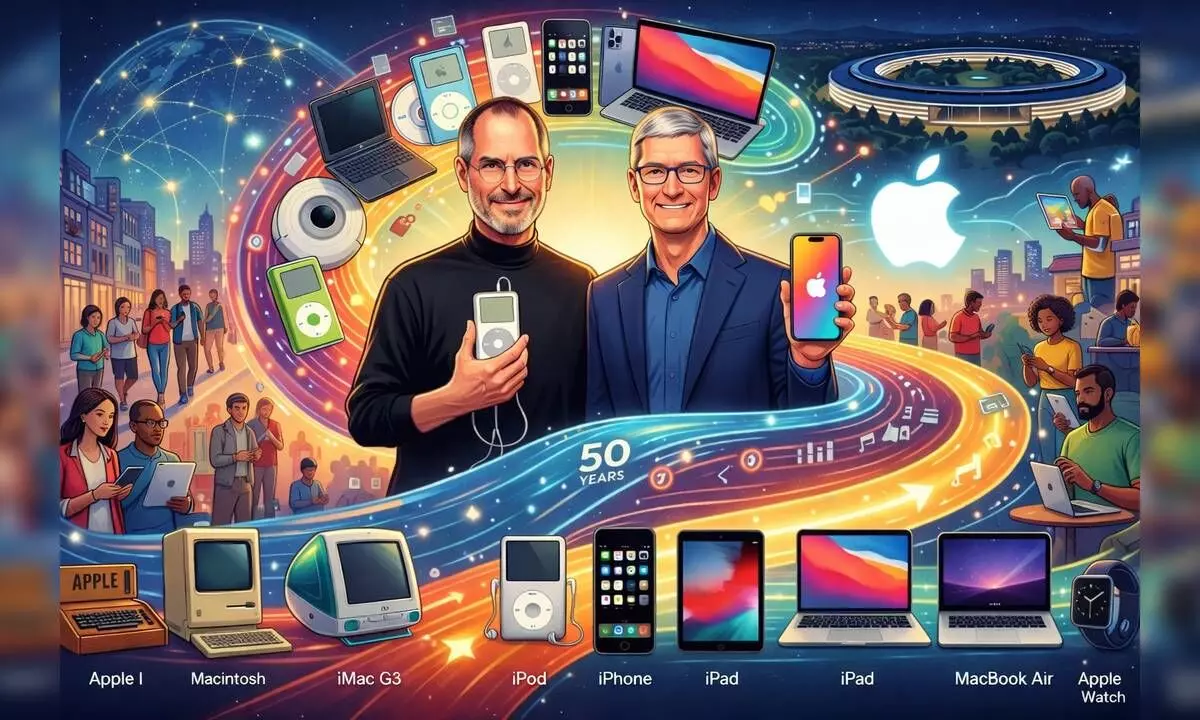
Cupertino (United States): Apple’s 50-year journey, from an April Fools’ Day garage start-up to a $3.7 trillion giant, stands as one of technology’s most remarkable stories of invention, collapse and revival.
On April 1, 1976, a 21-year-old Steve Jobs and 25-year-old Steve Wozniak founded Apple Computer in Los Altos, California, alongside adviser Ron Wayne. Early uncertainty saw Wayne sell his 10 per cent stake for $2,300, a decision that would later be worth hundreds of billions.
Apple’s first major breakthrough came in 1977 with the Apple II, one of the earliest successful personal computers. Its 1980 IPO turned early believers into millionaires. In 1984, Apple unveiled the Macintosh, introducing the graphical user interface and mouse to mainstream computing, backed by an iconic Super Bowl advertisement.
But high prices and internal tensions led to turmoil. CEO John Sculley, whom Jobs had recruited, clashed with him, resulting in Jobs’ exit in 1985. Over the next decade, Apple struggled against cheaper Windows-based PCs. Leadership churn and strategic missteps pushed the company to the brink.
The turnaround began in 1997 when Apple acquired NeXT, the company Jobs founded after leaving. Within months, Jobs returned as CEO, struck a crucial deal with Microsoft, and began rebuilding Apple’s product line.
What followed was a historic innovation streak. The iMac revived Apple’s design appeal. The iPod, launched in 2001, transformed music consumption and paved the way for digital ecosystems. In 2007, Jobs unveiled the iPhone, combining a phone, iPod and internet device, redefining the smartphone era. More than 3 billion units have been sold, and it remains Apple’s biggest revenue driver.
The iPad extended Apple’s influence further, cementing its role in shaping consumer technology and culture.
After Jobs’ death in 2011, CEO Tim Cook focused on scaling operations and expanding services. While Apple hasn’t replicated the disruptive impact of the iPhone, it has grown into one of the world’s most valuable companies, with revenues exceeding $400 billion annually.
From a scrappy partnership signed on April Fools’ Day to a global powerhouse, Apple’s journey reflects bold vision, near-failure and reinvention, a rare blend that continues to define its legacy.





